Showing posts with label Books. Show all posts

Thursday, December 23, 2010

Julian Assange x Atlas Shrugged

I cant help but notice the similarities between the opinions of Julian Assange and characters in Ayn Rands book, Atlas Shrugged. For a while I was sitting on the fence, wondering if such extreme disclosure would be detrimental, or beneficial to society in the long run. It is now apparent that the American government and the mass media assumes that most people are idiots. The technological revolution has allowed common people to educate themselves using the internet and to access information that would otherwise have been unattainable to them.

I simply do not understand why information that has been obtained by journalists at Wikileaks should be subdued? The people who do not want it to come out surely have the most to loose. Obama has been a strong advocate of political reform, and this transparency is what may finally bring it about. Most politicians are thieving scumbags with very little respect for the people or flags they serve. It may take a revolution to create a solution, and I for one am ready to see the sparks fly.


Independence is the recognition of the fact that yours is the responsibility of judgment and nothing can help you escape it.


The spread of evil is the symptom of a vacuum. Whenever evil wins, it is only by default: by the moral failure of those who evade the fact that there can be no compromise on basic principles.


Men have been taught that it is a virtue to agree with others. But the creator is the man who disagrees. Men have been taught that it is a virtue to swim with the current. But the creator is the man who goes against the current. Men have been taught that it is a virtue to stand together. But the creator is the man who stands alone.


Well, there's a question as to what sort of information is important in the world, what sort of information can achieve reform. And there's a lot of information. So information that organizations are spending economic effort into concealing, that's a really good signal that when the information gets out, there's a hope of it doing some good.

Tuesday, March 18, 2008

The Jungle Books - Rudyard Kipling

Everyone has heard of the Jungle Book. If you don’t know who Baloo, Bhageera, and Mowgli are then I do not know what fucking planet you have been living on. Although the Jungle Books were written in two parts, 1895 and 1895 respectively by Rudyard Kipling, it was not until the cartoon was released by Disney back in the 80’s that his works gained mainstream commercial notoriety. Having only seen the cartoon one might assume that it reflects accurately what Kipling put down on paper, when in fact nothing could be further from the truth. The cartoon is just a teeny tiny excerpt from a collection of magnificent short stories that compile The Jungle Books.


The Jungle Books consist of exactly 15 tales, each concluded by a short song or poem. More accurately I would refer to them as ballads about each of the stories. Kind of like the songs you could imagine tribes to make up after an epic adventure to pass down their legends from one generation to the next. Firstly I should praise Kipling’s narrative. He is another talented author who can easily draw any reader, old or young, into his carefully knitted web of words. The writing is simple enough to allow a smooth flow of reading but yet takes your mind to such depths where you are left contemplating deeper issues than you could imagine this book to propose. The content of these stories is nothing short of genius!


Rudyard Kipling was born in India but moved to England shortly after that. He only returned to India as a journalist when he was 17 and stayed on till the age of 24, but it is obvious that his time spent in India left a significant impact on his being. It was almost 10 years later while settled in Brattleboro, Vermont that Kipling penned The Jungle Books. In most cases each story uniquely approaches situations from the point of view of the animals. And not from a childish perspective of an animal with simplistic human thoughts, but of an animal who IS an animal, conscious of being an animal, and aware of the ways of man. And in some cases hazardously ignorant. Through his stories it is evident that Kipling was revolted by human beings in general, our natural lack of compassion for animals and respect for the planet we live on. This is most clearly demonstrated in his story “Letting the Jungle In” where Mowgli takes revenge on the village that drove him out and tormented the Mother who adopted and nurtured him. Here Kipling does not shy away from the threat that real wild animals pose to human beings. Nor does he avoid painting gruesome scenes where men and women are speared by the tusks of elephants.


Some of the stories do demonstrate a kinship between man and beast as in “Rickki-Tikki-Tavi” the playful mongoose who goes against vicious garden cobras to save a young boy who befriended him, or as in “Toomai of the Elaphants” where a young elephant caretaker is given a glimpse into the secret rituals of his wards. In each of his stories Rudyard Kipling has managed to witness a situation animals are in and create a story within it. His imagination is astounding. And in his time when he could not turn on the TV to witness animal behavior on the Discover or National Geographic channel, I can only imagine how long he spent looking at animals, studying their movements, and making up these wild tales in his head. Overall The Jungle Books was a splendid read and definitely I would flip though and read excerpts from again and again. It is exactly what I look for in an adventure novel that packs a punch and leaves you with more than enough think about. And as an author I think Rudyard Kipling is definitely worth discovering.

Tuesday, October 02, 2007

Jakarta Underground – Moammar Ekma

I am back in Jakarta. So yesterday afternoon while I was stuck in traffic, sitting my cousins car I noticed he had a copy of the book Jakarta Underground tucked in the back seat pouch. Traffic in Jakarta seems to have become even more insane so I picked up the book and actually managed to get past a few chapters. The books serves as a chronicle of the increasingly erotic Jakarta nightlife that the author, Moammar Emka, has attempted to bare for all readers in his own covert fashion. Each chapter unveils some new party fetish that the city of Jakarta has to offer, if you have the finances and the connections to open the suitable doors. The first chapter whisks you into the world of naked parties as Emka is whisked away to Pluit by his new acquaintances to experience, literally, an underground naked party that took place in a basement in some affluent neighborhood. The following chapters go on to uncover the worlds of full service massage parlors and strip shows at karaoke bars, even some dodgy sex in a car service.

While until now the premises of the book my sound interesting, I want to clarify that in my opinion, the book Jakarta Underground is full of shit. Jakarta Underground is probably the worst book depicting the sordid night life of any city on the planet that I might have glanced at in the last 30 years of my life. And this is a gross understatement. My first qualm with this book is the writing style. Now I do not fancy myself a fantastic writer but that is why I only maintain a blog. But this guy writes like I did when I was in 8th grade. When writing about sex or erotic situations it is not difficult utilizing words to initiate some activity below the belt of your male readers. While writing about the Pluit Naked Party Emka actually bored me! He explains how he got naked and walked into a room of over 100 undressed human beings in a total club scene and after a paragraph or 2 about naked gyrating pelvises, it is 5am and they are heading home. What the fuck? Attended a party like that is enough to write a whole paragraph about, if you were actually there!

Moammar Emka has in his own words tried to portray Jakarta as the Las Vegas of Asia, and in his attempts to do so it seems to me that he has compiled a bunch of stories he has heard about from friends and strangers and compiled them into a book. That to, poorly. All off his stories begin that he met up with friend A, who introduced him to friend B, who took them both out for some wild night on the town or a trip to some kinky day spa. Friend A and friend B always engage in illicit activities while Moammar conveniently refrains from dipping his feet in the pond but somehow manages to tip fairly and keep the women he comes across satisfied.

Oh MR. Moammar Ekma, you are such a gentleman. BULL FUCKING SHIT!!! I read through this guys crap in the first chapter. First of all who walks into a room of 100 naked people and refrains to mention anything about how they FEEL standing there wearing nothing. Then he spends over 5 hours there and does not mention weather he got a hard on or if he sat down to conceal it or if any women brushed against him. He writes as though were spying into the room and not actually participating in the party. At the end of that chapter he writes how he retires to his hotel room with thoughts of naked ladies swarming through his head. At least if he ended that chapter by saying he gave himself a good wank before falling asleep he could have added some authenticity to this fairytale. If Emka really did go this party then he just does not have the balls to write things AS THEY ARE and should therefore just publish his writing under a pseudonym. And if things really happened as he says they did then his still has no balls and possibly no penis either. You mean to tell me he was in a massage parlor with 2 girls whom he allowed to get naked, rub themselves against him, and then he lured them into proposing sex and then he says no thanks and walks out.

The fact that others have dared to compare Jakarta Underground to Sex in the City and Moammar Emka to Carrie Bradshaw sickens me. I want to swivel to the left in plush executive chair and puke. Puke, puke, vomit, vomit. If you cant admit that you have a dick and that you love you love to use it, some divine hand should reach down and rip it away from between your legs. All this book has managed to do is piss me off fist thing Tuesday morning.

Tuesday, September 25, 2007

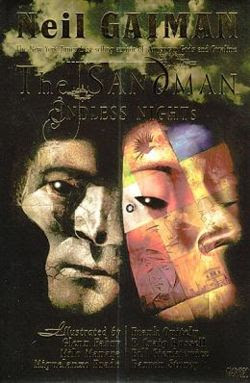
Endless Nights – Neil Gaiman

I have written about Neil Gaiman before, the author of American Gods, Mirror Mask, and my personal favorite, the Sandman comics. Rather than comics I would actually call them graphic novels. I cannot possibly praise his work enough because for the last few years he has been my favorite fiction writer. I purchase pretty much any of his works that I can get my hands on. There are ten volumes that have been released of Sandman of which I only have the first 7. The book stores I visit never have stock of the last 3. However during my last trip to HK I managed to scoop a copy of Endless Nights.


To tell you what Endless Nights is about I would have to explain the premise of The Sandman comics. They are graphic novels of whom the pivotal character is Morpheus aka The Sandman, The King of the Realm of Dreams. He is only 1 of 7 siblings known as the Endless, Death, Destruction, Despair, Destiny, Desire, Delirium, and Dream. And although The Sandman comics revolve mainly around Dream, his siblings also make significant cameo appearances. Only by reading the comics could one possible appreciate the depths into which Gaiman has traveled to create such fascinating and unfathomable characters. Endless Nights was written a while after The Sandman series had been laid to rest. It serves as a collection of 7 stories, 1 about each of the siblings. All written by Gaiman but each borrow the skills of various artists and letterers.

In my opinion each of the 7 stories was mesmerizing and I enjoyed the entire collection thoroughly. But that is not surprising because like I said, Gaimans writing has really grown on me. That allows me to read him without being critical and just trusting where he is taking me. I don’t know if that makes sense to anyone else. What was exceptionally mind-blowing about this book though is the art work. Each of the stories is so unique and it is amazing to see how each artist has translated Gaimans work into a visual opus. After reading each story I literally went back and looked over them twice over to enjoy them. Numerous artists have contributed to this book such as Milo Manara, Frank Quitely, Dave McKean of course, and many more.

I do not want to take away from the beauty of the book by scanning the images and uploading them to the internet. Nor do I want to fuck up the spine of my book by doing that. But these guys really take graphic novels to a whole new level by combining digital art with traditional ink and paper. Some of the stories daringly break so far away daring from traditional comic book form that theirs must be commended for being so bold. A collection like this is something one could make a feature documentary about. I honestly wish they had exhibitions for these artworks, that is something I would love to see. I am not a person who is overly hung up on possessions apart for sentimental shit, good books, and music. And Endless Nights is a book that I will enjoy reading over and over again for a long time.

Tuesday, August 28, 2007

Harry Potter and the Deathly Gallows – JK Rowling

I totally forgot that I was supposed to write about this book. It has been almost 2 months since I read the last installment of the Harry Potter collection. I have enjoyed all the other volumes thoroughly so I was hoping for quite a bit of action considering this is the last I would ever see of Harry Potter. I must say that I was quite disappointed with the size of this book and expected something with a lot more pulp, but alas I could only anticipate that Rowling made up for it with some quality writing. And in all fairness, I cannot say that I was disappointed.

I am sure there have been some seriously critical reviews about The Deathly Gallows online. The whole Harry Potter craze kind of went overboard, and that is a severe understatement. All the hype and media coverage surrounding the book is bound to put new readers off rather than draw them in, plus the whole movie franchise got so many of my friends saying, ‘Ill wait till the film comes out’. I remember when the first book became such a hit, the media was all about how kids and grownups alike all have their noses stuck between the pages of books again rather than spending every spare moment they have transfixed to the eerie blue glow of their television sets. But with this last episode it seems they are more concerned with weather a spoiler has been leaked, how much money the author has pulled in, and what life has in store for us after Harry has left the building.

I am going to try and put my finger on what exactly it is about the Harry Potter collection that I have enjoyed. Primarily, I would have to say it is the authors simple art of storytelling. From the first sentence of the first chapter in the first novel, Rowling sucked me in. She did not waste any time to introduce a multitude of peculiar characters (of the human kind) and even more interesting species of the magical variety. Her imagination seemed endless as she introduced beverages like Butter Beer that cannot possibly exist but still made my mouth water, a whole spectrum of places that I would love to visit, and structures I was visiting over and over again in my imagination. On top of all that she gave her characters such unique traits and exceptional personalities that readers could so easily relate to them and therefore so quickly form personal connections with Dumbledore, Ron, Hermione, Hagrid, and Harry. Some writers struggle their entire lives to create such impressionable characters, writing complex epic novels, and Rowling has made her achievement seem effortless.

Criticism sprouted soon after the release of the first Harry Potter book as people wondered what fate awaited Harry and weather Rowling could keep up with the momentum that was building. The pressure must have been immense for this first time author and many noble people have been known to crack and buckle faced with the promise of fame and fortune as she was. But throughout the process I think it is safe to say that Rowling has kept a really cool head and maintained her integrity. She did give into a movie deal but in today’s day and age, that is a given. And as long as she can insure the quality of HP outcrops, I think she should milk the franchise for all its worth. Plus being a reader even I was eager to see how her creations would translate to film. The pressure never seemed to let up till she finally released the final installment of the Harry Potter chain, and even now the press is all over her case to find out what she will write next. And although numerous critics have poked holes through the plots of her volumes and bitched and whined about how she has treated her characters, I must say I have no complaints at all. NONE WHATSOEVER…

Ultimately the story has been the writers to tell and in my opinion she gave me the greatest gift, the inspiration to read. Every time a Harry Potter book has come out I have been in a reading slump where I got nothing good to read. Once I pick up the latest Harry Potter, for some reason I cannot put it down. And apart from the reasons listed above, I cant say why they are so addictive. I savor each page and literally cant even put the book down while I eat. My TV goes though serious neglect for that week as well. But the best part is that when I am done reading that book, I get the bug, and I have to keep on reading more, and more, and more. Reading Harry Potter reminds me of how much fun it can be to read a good book and for months after I need to keep looking for the next fix, another great escape, and I love it. That being said, To Ms. Rowling Thanks for the ride mate!


**I heard that there is a sort of Harry Potter world in development. How fucking cool would that be? You can just imagine the number of rides they could come up with using the material from the books, not to mention how they can design the whole look and theme of the park from the areas, streets, and building, to all the food and drinks sold in the stores. This place could be awesome! How much fun would that be to work on that project? Just found some info on it here.

Thursday, August 23, 2007

The Curious Incident of the Dog in the Night-Time – Mark Haddon


I cant remember who gave me this book, or if I bought it myself, but I read it for the first time more than a year ago. It was a short book and easy to get through so I decided to pick it up again last week. ‘The Curious Incident of the Dog in the Night-Time’ is a unique murder mystery told from the point of view of Christopher Boone, a 15 year-old autistic boy. Therein I believe lies the authors first challenge. Some of my favorite books have been narrated by kids, like ‘Catcher in the Rye’ and ‘To Kill a Mocking Bird’ both of which are now timeless classics. Whereas Salinger used the sharp words of an edgy frustrated young man, and Harper relied upon southern charm combined with the rough finish of a very young tom-boy (with a magnificent vocabulary) growing up in the US, Haddon has probably selected the most challenging character of the 3.

Autistic children are generally very reserved, quiet, and tend to view the people and situations around them in a 2 dimensional manner. I presume Haddon spent a significant amount of time studying several cases before putting pen to paper, or rather fingertip to keypad. Chris, a young mathematical savant, from the offset of the novel is out to solve the mystery of who killed his neighbor’s dog. And the beauty of Haddon’s writing in my opinion is how he keeps his main character focused on that mission while he unravels a number of troublesome issues around Chris, without betraying the nature of his character. He does not offer vivid descriptions of how Chris’s parent’s may have suffered because of his handicap but rather allows his character to recount instances from his own point of view where they were obviously driven half mad by his actions, but he shows no real regret or even recognition of his fault because he is incapable of viewing the situation in that manner. I found this style very clever and also quite interesting.

Writing from the point of view of an autistic child also limits the amount of adjectives or descriptive writing an author can use. I would not say the author has worked around this aspect but rather utilized it to create a more characteristic and unique novel. The pages of this short masterpiece are sprinkled with an array of diagrams, sketches, and maps that Chris uses to describe things. He is a mathematical genius so many of these diagrams went way beyond my understanding. He describes numerical games he plays in his head to block out the outside world when things get stressful. These are passages I find absolutely magical. You can imagine how frustrating it would be walking a child through the mall and suddenly he drops to the floor pressing his face against the cold tiles while he screams at a steady pace on the top of his lungs. People would crowd around you asking what is wrong with the child and the more you try to touch or move the child, the more frustrated he would get. Scenes like this are madness to you and me but for Chris they are soothing and tranquil as he escapes into his mind. I love the way Haddon transgresses that emotion of calm despite of what may be going on outside Chris’s head, all the while being fully conscious of what is going on.

'The Curious Incident of the Dog in the Night-Time' comes off on the surface as a story about solving the murder of the neighbor’s poodle, but ends up being so much more without the pretention. Chris ultimately solves the murder and completes his book, meanwhile giving us a glimpse into not only his life but also the lives of the people connected to him. The beauty of it all is that the author shares the other stories and emotions with the reader through the restricted communication skills of a 15 year old autistic savant. If you are looking for a book that spins a fantastic tale, I would not recommend this book, but if you are up for something totally out of the box in terms of approach to storytelling or writing, you need not go any further.

Thursday, August 16, 2007

The Kite Runner - Khaled Hosseini

I am not usually fond of reading modern books about people. And I do not mean biographies but rather books written in that sort of narrative style. Also I found that a lot of South Asian writers have been pimped vivaciously by the western media and critics when in fact their writing is not so amazing at all. So when I was given ‘The Kite Runner’ it sat on my shelf for a week while I read Harry Potter. Once I was done with that I had the reading bug so I picked up this book with a not so intriguing cover.


As I mentioned before, the book is written as a narrative from the first person, Amir, the main character of the book. The writing style was smooth and simple which allowed me to be easily absorbed into the story. It was as if I were reading a persons journal or being told a story by a friend and this form was maintained through out the novel, which I found very comfortable. At times Hosseini’s account was even poetic and his vivid descriptions quite stirring. From the beginning of the story the author has laid the grounds for suspense. Amir is living in the United States and has been called back to Afghanistan by his uncle offering him ‘a way to be good again’. From there the tale continues to unwind as the pivotal character sorts through his emotions and thoughts taking us between flash backs from his childhood growing up in Afghanistan and the series of events placing him where he is now. As far as this aspect f the book goes, I would say the storyline is interesting and entertaining. A reader is compelled to turn the page and find out the fate of the stories characters which I think is very important in any novel. I began to actually care about the people in the story.


I would not like to give away any important details of this book because it is defiantly a good read. It took me only a week of very slow reading to get through it and once I put it down I was reminded of a book I had read in Humanities class, ‘Things Fall Apart’ by Chinua Achebe. Our instructor used that novel to open doors to numerous discussions and issues proposed by that story, regarding sexism in society to religion. ‘Things Fall Apart’ addressed and invited interrogation of those issues in some way or another. I feel that ‘The Kite Runner’ similarly addresses a variety or issues that should concern people today with its multiple layers. On one level you have the emotional tale of a man fighting the ghosts of his past, on the other you have his battle taking place in a war torn Afghanistan. As he grows we also see how Kabul was once a jewel in South Asia and how it becomes what we have some to know it now, a name announced on new channels synonymously with suicide bombing, terrorist, casualties, and war. Houseini does not shy away from dangerous topics as he indirectly criticizes the Muslim religion and he praises it as well, and openly mocks the hypocrisy of the Taliban. There are other issues that readers might notice and find worthy of debate like the role of women is Afghan society or the integration of modern day refugees into western society.


There are so many areas this tale brushes across and at the heart of it there is a plot that will at times cause you to smile and at others bring tears to your eyes. It does have its fair share of flaws as well but over all I found ‘The Kite Runner’ to be quite worthwhile. It is not a book I would bother reading more than once nor will I look out for more books in this genre or even by this author. I do not think it is a definitive study of the Taliban or the recent history of Afghanistan but it did open my eyes to the subject and make me think of Afghanistan in more of a human sense. Hosseni sheds light on the culture and traditions of his people and any Afghan reading this book would be infected with a sense of pride and nostalgia.

Tuesday, June 19, 2007

Gai-Jin (1862) by James Clavell

Gai-Jin is the 3rd installment in James Clavell's Asian Saga, following Shogun (1600) and Taipan (1841), both of which I thoroughly enjoyed, and reviewed in the past. What I loved most about them is the way Clavell managed to incorporate facts about the history of China and Japan in those eras into the novels, and create characters that exuded exaggerated levels of greatness and weakness. I must say however that Gai-Jin has left me disappointed. I have only gotten half way through the mammoth book by forcing my way through it, whereas with Taipan I was rationing the pages to savor the experience. The main flaw with this book I feel is that, with Shogun and Taipan, Clavell had amazing stories to tell which he laced with historical facts and information which in turn added realism to his novels and brought the amazing characters he created to life. In Gai-Jin it is as if Clavell has collected a bunch of interesting facts about the Westerners and Japanese in Japan around the mid 1800's and he came up with a story to wrap around these facts, rather than the other way around. This leaves the novel lacking marrow. The characters were very 2 dimensional and only occasional references to Dirk Straun, the 'Green Eyed Devil' from the previous episode seemed to stir interest and arousal in the new characters. I felt at the end of the last book that Clavell ended things off quite abruptly and left some loose strings dangling, which I hoped he would have picked up from. Rather there is little reference to China or the seeds Dirk Straun planted as Taipan. The effort he has put into this novel would have been much better spent on making Taipan longer.

In Gai-Jin we join Dirk's grandson Malcolm as he arrives in Japan with a young French girl in tow. Due to some 'action' early in the tale Malcolm is injured and spends the bulk of the story in a pretty sorry state while we are left to focus on the French lass Angelique. She is fucking irritating. I do not have anything against women in literature and there are some feminine narratives I have thoroughly enjoyed, but this is not one of them. Clavell stays true to his style and takes is through the thoughts of all his characters from Malcolm to Angelique, and even the various Japanese counterparts, but somehow for me he failed to evoke any sense of interest or concern. Without any attachment to the characters I could not be bothered what fate they were destined to meet. I still do enjoy the facts about Japanese culture and history, like learning that Japanese had outlawed wheels during the 1800's to prevent Westernization. I have only gotten halfway through the book so far and I am going to finish it, more for the sake of closure rather than entertainment. I will also still read Rat King and Nobel House hoping to get sucked back into Clavell's Asian Saga.

Thursday, April 05, 2007

Tai-Pan – James Clavell

**pictures nabbed from www.allposters.com

James Clavell is probably best known for the first installment of his Asian saga, Shogun. The fictional epic which was later made into a television serial brought to light Clavell’s immense knowledge of Japanese culture and meticulous attention to detail. He described ceremonies and customs which were still relatively unknown to most westerners at the time and through fiction scrutinized traditional Japanese mentality. It is with same scrupulous intention that Clavell approached Tai-Pan, his second episode in the saga.


In Tai-Pan, China takes the center stage. The story unfolds as the war between Great Britain and China is neutralized by the handover of a small island called Hong Kong to the British. The island provides the backdrop to this tale of a man’s hunger and struggle for power. Clavell ingeniously brings to life characters that personify human natures strengths and weaknesses and through them he represents the culture and mentality of Chinese and British alike, living in the 1800’s. His knowledge of the era and the culture baffles me and I must concede that he must be a qualified historian apart from being an extremely talented fiction writer. Within the entrails of an awesomely entertaining story he manages to enlighten the reader with facts and particulars about China that are stimulating and educational to date.


The main character in Tai-Pan would be Dirk Struan, the hard driven English trader fighting to stay on top of the game and maintain his Tai-Pan status. He is surrounded by an assortment of equally charismatic and colorful characters that existed at the time. My favorite character would have to be Struan’s Chinese mistress, May-may. She is a feisty young woman who is somber in public and a wild tiger behind closed doors. I especially appreciate the manner in which Clavell has ‘gotten into’ her mind and psyche. The story is not written from one particular person’s point of view but rather as it progresses we get to sit in each character’s head and experience their thoughts, logic, and reasoning. May-may is so fascinating to me because she looks at situations from the Chinese perspective as well as trying to understand the beliefs and actions of her lover, Struan. She raises conflicts regarding faith in Christianity versus traditional Chinese beliefs in their Gods. She manages to do this in most cases with such lightheartedness and innocence that one can not help but find her lovable and amusing. She also represents the more provocative views society held over the roles of mistresses. This is just one of the aspects in Tai-pan that I felt was apparent in the Far East today.


Clavell begins to build his epic tale with the apparently simple creation of heroes and villains with traits poles apart, but soon enough the characters begin to crack and expose their souls within, each a victim of their own flaws and merits. Even the most seemingly despicable people show some grace, which I believe is an accurate portrayal of human beings in general. No person is completely 2 dimensional and James Clavell brings a 3 dimensional scale to his conceptions. The story itself comes into a slow climb at the start; in fact I would say it begins with a quick drop when the hero, Struan, looses all his wealth. The deliberately unhurried ascension that follows is where the excitement and marrow of the story lay. A meticulously well thought out safety net not only prevents Struan from being consumed by his enemies and business competition, but also lays the foundation for a whirlwind of an adventure to come. Once this plan is set in place the story takes off like a rollercoaster dropping over the peak.


This mass of a book, over 700 pages, was not as much of an effort to get thorough as I first expected. Once I got past the first hundred pages I was captivated. The high voltage battles on the high seas, battered ships struggling against ruthless squalls, and men forced to battle with each other to save face bring color and energy to this novel. The vivid descriptions of the food, aromas, bars, brothels, and country sides are all done in a manner unique to Clavell and strengthen the institution of Tai-Pan. The story did not slow down at all! As a matter of fact, when I got towards the end I was wondering how the author was going to tie up loose ends. The action, mystery, and intrigue would just not let up. It lasted till the very last page. In a way I was a bit disappointed that so many issues were left unattended to but being a saga, I presume they will be pivotal in the following novels. There are so many characters that Clavell gave birth to as well that yet have to feature. And you can tell from the role they played that in future their presence will be felt.


I am excited to work my way through the rest of this series. Unfortunately I will not be going to HK for a while so I have started on another book till then, ‘The Unbearable Lightness of Being’. But Tai-Pan is something you have to check out when you are in the mood for a good adventure. I could write so much more about it if my finger did not hurt so fucking much and if I could give the story away.

Tuesday, January 30, 2007

Kafka on the Shore - Haruki Murakami

*all paintings courtesy of The Scholten-Japanese Art Gallery. Very cool stuff.

I finished reading ‘Kafka on the Shore’ about a week ago, but it has taken me that long to brood over the book to actually write about it. The book was passed on to me by a friend who said it was weird and that I might enjoy it. Thank you S. I am intrigued by all things weird, but what I found even more striking was the title. ‘The Metamorphosis’ by Franz Kafka was one of the first books I read in college and it had a profound effect on me. I felt an inexplicable connection with Gregor Samsa, and I have never been able to look at a cockroach the same way since reading that book. It had been a while since I had read anything mind blowing so I was excited about ‘Kafka on the Shore’.


The book was originally written in Japanese. Whenever reading translated books I tend to wonder how much of the books character and art form is lost in translation. With good books, as I have mentioned before, there is a certain poetic value, and unless the translator has a good grasp of both the languages they are working with, quite a lot of the marrow can be misplaced. Based on the version I read, I would say the narrative flowed very well but as the plot is based in Japan and the characters are immersed in modern and ancient Japanese culture, I felt some of the phrases or satirical references might not have packed as much of a punch as they the author might have intened. But at this point in life I think I can write off learning enough Russian or Japanese to really savor some of my favorite literature.


‘Kafka on the Shore’ is a bit of a mysterious book so I will try not to give too much away. Reading this book at first is like reading 2 stories. The stories are parallel and the author bounces back and forth from one tale to another from chapter to chapter. At first this might be a bit irritating because the stories seem to have no connection at all and just as you are getting into one you have to read the other. Obviously as the story progresses the 2 narratives finally converge in a moment the reader is left anticipating. The parallel is artistically created and the transition between them gets smoother as the story progresses.


One side follows the trail of a 15 year old boy Kafka; as he leaves home in an attempt to escape prophesy that looms over him. I found his character to be redolent of Holden Caulfield, from ‘Catcher in the Rye’. Like Holden he was well immersed in his thoughts, the psyche of an introspective and extremely intelligent 15 year old, preoccupied with music, literature, and of course sex. The author uses Kafka’s eyes and mind to paint a picture with words. The corresponding tale is centered on Nakata, an old man, long retired. A victim of some freak accident during his childhood, he has been left simple. Once a promising student from an affluent family he was left to spend the bulk of his life doing menial jobs in the countryside. Although the accident robbed him of intelligence and the ability to read and write, it endowed him with the aptitude to communicate with cats. Finding out what brings these 2 characters together is the basic lure of this novel.


I enjoyed pacing myself with this book, reading 2 chapters a night, although sometimes I felt like shooting through it. I like the writing style and the numerous cultural references. Haruki makes use of music in his novel to set a mood. There are references from Eric Clapton, Prince, and Led Zeppelin to Beethoven, Mozart, and Schubert. Haruki also leans on various literary and film classics, Western and Eastern, to give his story more fiber. I found these plugs to be extremely interesting and moreover educational. The pop culture references he used gave this book an exciting modern Japanese texture. I have not really read any new Japanese novels and the style was definitive. There were a couple of scenes in the book, particularly one with a character that looks like the guy on the Jonnie Walker whiskey bottle, where my imagination went into Japanimation. I usually visualize a story when I am reading it and this scene just took a Tarantinoesque spin in my mind. It was also probably the most gruesome and bloody scene in the book.


As you read ‘Kafka on the Shore’ the book seems to get more and more metaphorical. It starts off based in a world of extreme reality, some of the writing taking the form of military reports, and then flowing into a fantasy world where even as a reader you are left wondering, ‘what does this mean’? On a metaphoric level I would say this book is about fate and freewill, the classic oedipal twist. Can one escape their own fate or is it predetermined? You would have to make your own conclusion as to what point Haruki is hitting home. And although the story is interesting I do feel that it is lacking in some areas. Firstly, there are too many loose ends. I found the structure to be flaccid and not well rooted. There were plots that remained unexplained and irrelevant even by the end of the book. Maybe a second reading will shed light upon them. Secondly, I think the story really required an antagonist. As the reality slipped into fantasy I think the author did try to throw some ‘evil’ in there but it was too little too late for me. I like to have the feeling that there is something dark lurking around in the background, even if it is just your own subconscious.


All that being said, ‘Kafka on the Shore’ is still a worthy read and I am looking forward to reading more of Haruki Murakami’s books. His style is unique to me and I think he is a very talented story teller. He attempts to reach a place in my head that very few authors venture and I really enjoyed that.

Friday, January 05, 2007

American Gods - Neil Gaiman

I am an ardent fan of Neil Gaiman and I have written many times before about his graphic novel ‘Sandman’ and other books I have read. One title that always captured my imagination is ‘American Gods’ but until a few months ago I was not able to lay my hands on a copy of it. Throughout my mature life I have held steadfast to the belief that expectation is only a setup for disappointment but Gaimans approach to fantasy is nothing short of magnificent and with a title as thus I was expecting to be thoroughly entertained.


The tale commences with an introduction to a character by the name of Shadow serving a 3 year sentence in prison for battery. Through an unfortunate turn of events, upon his release from prison rather than returning home to a warm bath and his wife, Shadow is enlisted by a strange old man to serve as a body guard as the old bugger travels across America taking care of some business. The nature of that business and the characters Shadow comes across are what define this novel.


The explanation I have offered is quite simplistic but that is really all I can say about the story without giving any of it away. I always find the reviews to be far too revealing just to pull readers in, but honestly this book needs no pimping. Gaiman has churned out an epic novel here with a massive theme. He offers mystifying explanations regarding the birth of gods and naturally enough their death. In classic form he utilizes his words weaving a tight web of love, deceit, hate, agony, despair, and finally closure. What I love about this book is how a seemingly simple idea can give birth to such a fantastic and entertaining tale. ‘American Gods’ is one of those books that I was left thinking about for days after putting it down. They were so many characters to consider and passages to go back and reread, appreciate. Gaiman has made use of his fantastic knowledge of history to add backbone to his novel. He has also obviously spent time traveling around the less explored areas of the United States, which provide the backdrop for his epic to unfold.


In fact America is just as much the pivotal character of this novel as Shadow is. Shadows journey takes us to America’s heartland and numerous mystical locations on the subcontinent that most Americans would not even know existed. Gaiman personifies mystical attractions such as a giant ball of yarn or even Graceland where thousands of people gather every year as spiritual vortexes. These places across America are where hopes and beliefs are strongest. I was quite amazed to read about some of the locations he describes.


In the prologue of this book Gaiman does address the issue that many may point fingers at him asking what right a British author has to write about American Gods. But once the book has been read most readers will come to understand that this novel is more defensive of American culture than dismissive. Where as some people deny America of having any real culture, Gaiman substantiates that American culture is present and very significant.


There are numerous angles from which one could perceive ‘American Gods” and to me that is true testament to how magnificent this book truly is. There are abstract motifs that give birth to metaphorical significance and direct character interpretations that could be debated for hours. Whereas some of Gaimans books I have read are only good for the once over, this is definitely a book I could read over and over again over the years. The last time I read ‘American Gods’ I was left contemplating belief and the strength and significance of belief and ritual. I come from a culture abundant with rituals so there was a lot for me to think about. ‘American Gods’ is not just a masterpiece that serves as a great escape but also a protagonist for thought. But as all art is, this is also relative. What’s good for goose aint always what’s good for the gander. But if you do decide to check it out go for the authors preferred text.

Wednesday, August 23, 2006

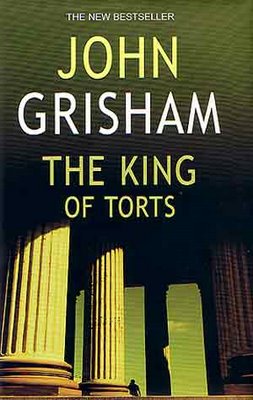
The King of Torts

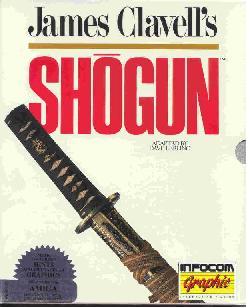
I will be on a beach in East Africa in only 3 more days. These words ringing through my head are all that is keeping me from loosing my mind right now. But getting through the next few days might as well be compared to climbing Mount Everest. Okay, that’s a bit melodramatic. I ain’t saving the world or anything with my job. Let’s say is like completing a 20 mile marathon and I am in horrible shape, spending my days behind a computer screen and my nights buried in books. During my trip to HK I managed to get volumes 4, 5, and 6 of Sandman Comics which has been very entertaining and I picked up James Clavell’s ‘Shogun’ and ‘Tai-Pan’. I hear his books are filled with accurate information about life in China and Japan during the 16th Century.


In between while I was bookless I managed to find a John Grisham book called ‘King of Torts’. At first the story seemed interesting as fascinating characters were introduced and Grisham brings their personalities to life with vivid physical descriptions. He weaves a mysterious web of their past but yet the characters seem to be very 2 dimensional and lacking marrow. There is an obvious effort to keep the story moving at a fast pace and I think that also makes the plot very predictable. In the beginning of the book we are introduced to the main character who is a struggling public defendant. Before you get 1/3rd of the way through, he has already established his strong moral code, then compromised his strong moral code, opened a huge law firm, and made hundreds of millions of dollars. Now it does not take a genius to figure out where this story is going. There is a more money, then refection, salvation, and the boy wins girl, typical Hindi movie style. But this is all part of an entertaining story and I accept that but I was hoping for more. I had heard so much praise about Grisham’s work.


“The King of Torts’ takes a through the world of high tort litigation where lawyers scramble to file mass claim law suites against high profile companies. These are suites that result in the recall of numerous products off the market. We have seen this happen to numerous pharmaceutical and motor vehicle manufacturers. Most recently what Dell is going through right now because of their faulty laptop batteries. Apparently, large law firms in America race to gather clients who have been harmed by these faulty products (in Dell’s case some people are claiming their houses were burned down) and have them file a joint suit against the offending company. The offender will usually seek a settlement outside of court rather than face a jury where the injured party can be awarded ridiculous sums of money. The most notorious case that comes to my mind at the moment was where that chick sued McDonalds because she got burned by their coffee, and she won. These settlements are paid out to all the plaintiffs who file the law-suite and the lawyers who file for them can take off as much as 40% off the top as fees. So where as a 500 Million Dollar settlement may have to be shared by 400,000 plaintiffs, the fees of 200 Million Dollars are retained by much fewer lawyers or even a single law firm that files the case. This is what I have come to learn from reading “The King of Torts’.


But what really pissed me off is the authors note at the end of the book. After having read though 486 pages of his work, I am read the final note which says:

“It is here that authors often submit massive disclaimers in an effort to cover their rears and, hopefully, avoid liability. There is always the temptation to simply create a fictional place or entity rather than research the real ones, and I confess I would rather do almost anything than verify the details.”

I know the names and places and other events in the book are all fictional. But when the author says out right that he is a lazy man who believes that “fiction is a marvelous shield”, I have to say sir that you have wasted my time. I would much rather have confronted some statistical information on the last page that mentions how much existing law firms have received in settlements in some high profile cases or how much some well known multi-national companies have paid out in settlements or even lost cases over the past few years. For most of the book the high tort game merely served as a back drop for Grisham to illustrate the scrupulous life styles of tort lawyers. He describes meticulously the interior of Gulf Stream Jets that the lawyers must have, trips to secluded islands, expensive cars, yachts, jewelry, and homes of the rich and famous. I might as well have been reading Joan Collins!


The issue Grisham selected was of a very powerful nature. If he is even slightly truthful then people are really losing out to large law firms when they are the ones suffering from bad drugs and faulty products. This is usually a result of large manufacturers cutting costs to save millions of dollars while they still lay off common workers and pharmaceutical companies rushing their products through the FDA, also obviously for quick returns. I feel that Grisham has gained the world ear through his talented writing and he has the power to inform. With some research and some facts planted into his tale he might have actually created some awareness amongst his readers. But with a ‘Authors Note’ such as the one he left I am left doubting any and all information I have licked up in this book. Unless I am proven otherwise that 3 days of reading will have been utterly useless.


Some might argue that reading fantasy books is also a waste of time but that is a genre I appreciate as an escape. I enjoy trips through the twisted imaginations of authors like Susanna Clarke, Tolkien, and Neil Gaiman. Their tales can lead to some serious philosophical revelations for me. I also revel in the classics because I feel in some form it is a historical education and some books are extremely poetic. And although obviously extremely talented, I don't cider Grisham as a relevant contributor to literature.


**This is a rectification of the link to Surri’s Blog in my last post. Check it out because he needs some pressure to continue updating. And he is one hell of an interesting guy.

Monday, August 14, 2006

Johnny Got His Gun by Dalton Trumbo

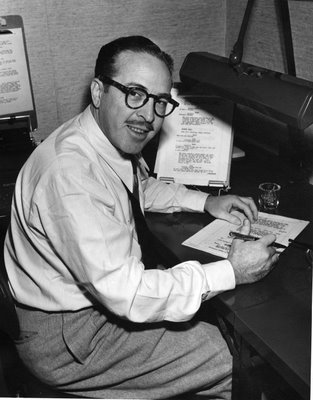
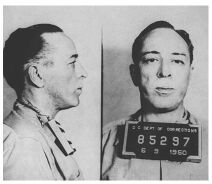
This is one of my favorite books. A copy was given to me about 8 years ago by my cousin Kareem and this is the fifth time I am reading it. It was written just before World War II and was actually published a few days after the war started. The story itself is set in America during World War I. The author, Dalton Trumbo also wrote the screen plays for Spartacus and Papillon, both notable films in their time. He was also one of the famous ‘Hollywood 10’ who were film writers that were blacklisted in the 1950’s during the McCarthy era for being communists. After that he went into self-exile in Mexico where he continued to write under a pseudonym. Dalton Trumbo died in 1976.


‘Johnny Got His Gun’ is a story about a young American boy named Joe Bonham from a typical white bread American town who is drafted to fight in World War I. He wakes up one day with a horrible headache only to progressively realize that he has been horribly injured in an attack. He has lost all his limbs, his face, sight, hearing, and speech. Trumbo accurately describes him as a ‘slab of beef with a mind’. The entire story takes place in his head as he faces his disabilities and recollects moments from his past. The writing style is brutally honest and I do not think there is a comma in the entire book. It is written just as you would expect an innocent small town boy from the early 1900’s to talk. Many sentences are long and overflowing with thoughts but it is still a very relaxed read.


The first barrier Joe has to overcome is distinguishing when he is awake and when he is dreaming. With no eyelids or eyes he has to focus all his energy just to achieve this seemingly simple task. The book is at many times frightening and horribly depressing. You are forced to imagine what life would be like in that situation where even if you wanted to scream you could not or cry or even attempt to take your life. He tried to hold his breath only to find that he was so badly damaged that a machine was doing his breathing for him. In this excerpt, Joe is under the impression that every night a rat is coming to feed on an open wound on his side. How ever there is no way for him to distinguish if this is real or just a dream. It is only one of many instances where Trumbo effectively depicts the torture Joe is going though.
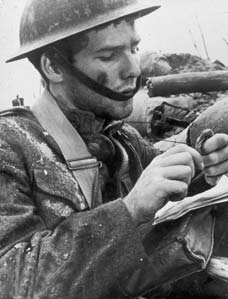


“He began to realize that the chewing of the rat was not a thing that would last for only 10 or 15 minutes. Rats were smart animals. They knew their way around. This one wouldn’t be content to go away and not come back again. It would return from day to day and from night to night to feed at his carcass until he went crazy. He found himself running through the corridors of the hospital. He found himself coming upon a nurse and grabbing her by the throat and putting her head down to the hole in his side where the rat was still clinging and hollering at her you lazy slut why don’t you come and chase the rats off your customers? He was running through the night shrieking. Running through a whole series of nights running through an eternity of nights yelling for Christ sake somebody take this rat off me see him hanging there? Running through a lifetime of nights and shrieking and trying to push the rat off and feeling the rat sink its teeth deeper and deeper.

When he had run without legs until he was tired and when he had screamed without voice until his throat hurt he fell back into the womb back into the quietude back into the loneliness and the blackness and the terrible silence.”
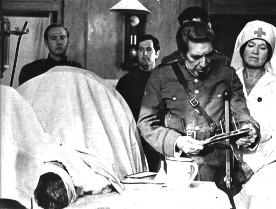


In this vegetative state Joe scrutinizes the many aspects of life, war, freedom, and liberty as he drifts between his dreams, memory, and harsh reality. The text is very powerful and Trumbo utilizes this setting to translate some extremely thought provoking and controversial ideas. This book is a commanding statement against war and it has been said that ‘Johnny Got His Gun’ was even banned during the Vietnam and Korean Wars. It takes the worst case scenario and unveils the hideous face of war and boundlessness of human stupidity. Joe eventually does manage to communicate so there is direction and a meaningful conclusion to the story. I would rather not give the story away though, because it is a worthwhile read.
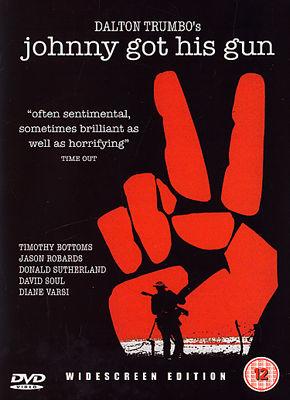


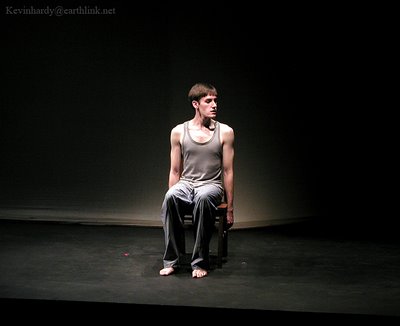
‘Johnny Got His Gun’ was interpreted to film in 1972 if I am not mistaken. It was directed by the author Dalton Trumbo and the only well known actor to me in the film was Donald Sutherland, who played the role of Jesus Christ. The film is shot in black and white and although it is worth watching, it can not compare to the force or splendor of the book. It is impossible to covey the ideas going though Joes head using images alone and if the screenplay just read as the book, it would be like listening to the book. The style of filming however is interesting as it really does convey a feeling of sadness, misery, and empathy. It has also been adapted to a one man stage show but I have never seen it, but it does sound very intriguing.
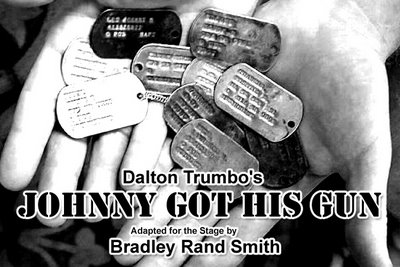


“There is nothing noble about dying. Even if you die for honor. Not even if you die the greatest hero the world ever saw. Not even if you are so great that your name is never forgotten and who’s that great? The most important thing is your life little guys. You’re worth nothing dead except for speeches. Don’t let them kid you anymore. Pay no attention when they tap you on the shoulder and say come along we’ve got to fight for liberty or whatever their word is there is always a word.

Just say mister I am sorry I got no time to die I’m too busy and then turn and run like hell. If they say coward why don’t pay attention because it’s your job live not die. If they talk about dying for principles that are bigger than life you say mister you’re a liar. Nothing is bigger than life. There’s nothing noble about death. What’s noble about lying in the ground and rotting? What’s noble about never seeing the sunshine again? What’s noble about having your legs and arms blown off? What’s noble about being blind and deaf and dumb? What’s noble about being dead? Because when you’re dead mister it’s all over. It’s the end. You’re less than a bee or an ant less than a white maggot crawling around on a dungheap. You’re dead mister and you died for nothing.
You’re dead mister.
Dead.”


In these troubled times we live in this book should be thrust into every soldier’s hand that is ready to go out and fight, kill, and die for their governments. Although some aspects of the book may be outdated, it is still overall a timeless classic. And if any of you are Metallica fans (the old stuff), you might recall the song ‘One’ from the album ‘and Justice for All…’ or ‘One’. It is an awesome track that is quite long and it switches between tranquil guitar solo’s and heavy distortion riffs from Kirk and James, backed by a Jason’s hard driving bass line, and Lars’s manic drum beats. ‘One’ was inspired by this ‘Johnny Got His Gun’.
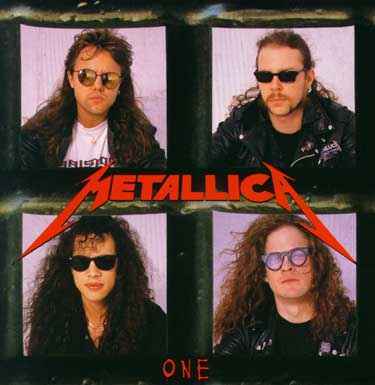


One Lyrics

I can't remember anything

Can't tell if this is true or dream

Deep down inside I feel the scream

This terrible silence stops me

Now that the war is through with me
I'm waking up, I cannot see
That there's not much left of me
Nothing is real but pain now
Hold my breath as I wish for death
Oh please god, wake me
Back in the womb it's much too real
In pumps life that I must feel
But can't look forward to reveal
Look to the time when I'll live
Fed through the tube that sticks in me
Just like a wartime novelty
Tied to machines that make me be
Cut this LIFE off from me
Hold my breath as I wish for death
Oh please god, wake me
Now the world is gone I'm just one
Oh god, help me
Hold my breath as I wish for death
Oh please god, help me
Darkness imprisoning me
All that I see
Absolute horror
I cannot live
I cannot die
Trapped in myself
Body my holding cell
Landmine has taken my sight
Taken my speech
Taken my hearing
Taken my arms
Taken my legs
Taken my soul
Left me with a life in hell


Tuesday, August 08, 2006

To Kill A Mockingbird

*Sorry, pictures were not uploading.

A friend of mine gave me an original print from 1960 of the book ‘To Kill a Mockingbird’ by Harper Lee about 6 months ago. It is a dark grey hard back with no print on the cover. The ends of the spine are worn down and there are pieces of thread hanging off it. The pages of the book are a yellowish brown color, and all the edges are crusty. It made the book all the more appealing to me but I never actually picked it up till last Saturday.

I had heard of this book before but I had absolutely no idea what it was about. The inside pages contained no introduction or review of the book. So the only way I could actually find out anything about the book was to start reading it. The story is written from the point of view of a 6 year old child. You do not realize until about the tenth page that the child is actually a girl. The story unfolds in small town in Alabama around the 1950’s. Harpers words read like poetry and her use of slang really brings the setting to life.


I guess you could say the core of the story does address racism but there is a lot more to the story than that. It is also about raising children, friendship, having a positive attitude, and standing up for what you believe in even against popular opinion. Most notably this book was about not making hasty judgments. I can see why it would have been very significant in its time. Harper holds back no punches when portraying the mentality of the characters through their dialogue. Racist slurs are spattered through out the book.

Each character is painted so well through Harpers words. There is just the right amount of intrigue and mystery weaved into every element of the story that makes ‘To Kill a Mockingbird’ a complete page turner. The poetic element also makes this book a breeze to go though and you come out afterwards feeling as if you have gained something. Most books nowadays do not deliver that. It is a must read for anyone who enjoys classics.

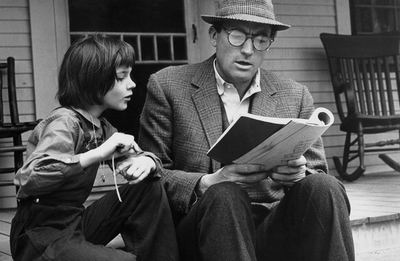
In 1962 the book was made into a movie staring Gregory Peck. I did not know this until jut now. As I was reading the book I was imaging the scenes in my mind. The book is written in a way that would make it very easy to adapt to a screen play for film. But looking at these pictures from the movie, I am not at all tempted to watch the movie or see any further development on it. Books such as this, in my opinion, can not and should not ever be made into films. Although I think it would make one hell of a stage play. So now I have run out of books to read. There are no good English book stores in this city that I know of so I guess I have to wait till I go to Hong Kong next week.

Thursday, June 08, 2006

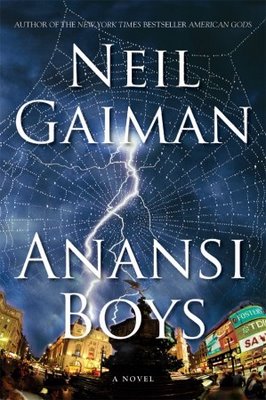
Anansi Boys

I finished reading Anansi Boys last night, another book by Neil Gaiman. I have mentioned him before as the author of the Sandman comics. I am also an avid reader of his blog. He writes very personally as all of us do on our blog’s and even interacts with reader’s one on one, answering as many questions as he can. He seems like a pretty cool person. And it is hard for me to imagine how a seemingly sane and ordinary fellow can come up with such mind blowing stories.


The story is based around the folk tales of Kweku Anansi the Spider. Growing up in Ghana where I believe the stories originated my care taker Aunty Gladys used to tell me stories about him all the time. Anansi was the trickster God who played wicked tricks to swindle the other animals of the forest out of their food or wine. He was also a care free spider who enjoying womanizing, fishing, drinking, and generally being lazy. All the stories were entertaining and not all of them had a moral. Most of the time Anansi would get away with being a crafty little bastard and sometimes he even died, falling victim to his prey.



Gaiman’s novel is based around these folk tales. Anansi Boys is aptly named as it is about his sons. It is a fantasy novel so there is a lot of magic. It takes place in present time and in the real world as we perceive it. There is conflict as well as humor and mystery. Anansi Boys is a relatively light novel and fun to read. It is amazing how Gaiman has managed to weave these old stories into something that can still entertain the masses. I was also surprised to find that the same stories I grew up listening to were also told by old people in the Caribbean islands. This is not just an amazing story but a story about stories. Through it one can appreciate the value of a good story and story telling. It has different meanings and metaphors on different levels that would definitely intrigue any interested reader. And once again there are numerous connections to Realm of Dream. I do not want to give any of the stories away or affect the perception of anyone who wants to read it, but you guys from Ghana must get a copy and all you guys on The Dream Blog as well.

Time Pass

Here is a quickie before I get to work. I came across the PBF comic strip site yesterday. It features cartoon strips similar to The Far Side. Not too many people like this dry humor depicted by the artist Garry Larson but they make me laugh, in a really weird way. Here is a couple I liked.